
Every thinking Man and Woman has a Dream

Become investor-ready—so you can raise capital for your business dream.

Tesla Foundation prepares founders, small businesses, and small cap to mid-cap companies with corporate governance, investor-ready documentation, and a clean data room—then facilitates introductions to aligned capital resources once readiness milestones are met.

TESLA FOUNDATION • CAPITAL READINESS

Every thinking man and woman has a dream that starts the same way: as a quiet idea that won’t let go. It might come during a late-night walk, a boring meeting, or while staring at a spreadsheet that doesn’t reflect the future you see so clearly. You imagine a business that serves people better, uses technology more wisely, or brings dignity and prosperity to your family and community.

The dream feels big, but the path feels foggy. Very quickly, you discover there are two worlds: the world of ideas, and the world of capital, governance, and investor expectations. You hear words like “data room,” “board minutes,” “Reg A,” “compliance,” and “due diligence,” and your dream suddenly feels like it’s speaking the wrong language. You know your market, your product, your team—but you don’t yet know how to turn that into something an investor or lender can trust.

Compliance-first. Documentation-driven. Introductions after readiness milestones are met.

Used by operators building fundable companies.
Governance • Data Rooms • Deck/Model Alignment • Capital Pathways

Who We Help

Three common situations we solve—fast, legally, and with documentation discipline.

Founders & Entrepreneurs

From pre-seed to growth. You need a clean structure, credible numbers, and a fundable story.

Small Businesses

Expansion capital for inventory, hiring, facilities, M&A, or new product lines—debt, equity, or strategic.

Small-Cap Businesses

Governance and reporting discipline required for serious capital, Reg A pathways, and investor trust.

Why Raises Stall

Most companies don’t fail on vision—they fail on readiness. Common deal-breakers:

  • Messy cap table / undocumented notes
  • Unclear entity structure & authorities
  • No governance trail (minutes, approvals, controls)
  • Deck and model don’t match
  • No investor-ready data room
  • Unclear capital pathway (equity vs debt vs Reg A)

The Tesla Foundation Program

A simple ladder that keeps fundraising disciplined and conversion high.

1) Funding Readiness Audit

10 business days
  • Investor-readiness scorecard + gaps
  • Governance & structure review
  • Capital pathway recommendation
  • Prioritized action plan

2) Governance + Investor Prep Sprint

30–45 days
  • Governance & documentation setup
  • Data room build (investor-ready)
  • Deck/model/KPI alignment
  • Fundraising process discipline

3) Introductions Program

90 days
  • Guided outreach & preparation
  • Curated introductions to aligned resources
  • Weekly deal-room management
  • Meeting coaching & follow-through

What You Receive

Concrete deliverables your team can use immediately (and investors can diligence).

  • Investor Readiness Scorecard (by category)
  • Data Room Index + folder structure template
  • Governance checklist + document requirements map
  • Deck ↔ Model ↔ KPI alignment review
  • Capital pathway map (equity / debt / Reg A / strategic)
  • Next-step plan with owners, deadlines, and priorities

Get the Investor-Ready Checklist

Download the checklist we use to prepare companies for capital: governance, data room, reporting rhythm, and readiness milestones.

FAQ

Do you raise money for us?

We prepare your company to meet investor standards and facilitate introductions to aligned capital resources once readiness milestones are met. We focus on governance, documentation, readiness, and process discipline.

How fast can we become investor-ready?

Many teams can be materially investor-ready within 30–90 days depending on current documentation, financial clarity, and governance baseline.

What do we need to start the Audit?

Basic corporate documents, current cap table/instruments summary, financial statements (or bookkeeping exports), your pitch deck (if any), and a brief overview of your funding goal and timeline.

Is this legal advice?

No. Tesla Foundation provides investor readiness, governance, documentation, and strategic advisory services. For legal matters, consult qualified counsel; we work alongside your counsel and compliance requirements.

Tesla Foundation provides investor readiness, governance, documentation, and strategic advisory services. We do not sell securities or provide legal advice. Introductions are provided to aligned capital resources and advisory firms when readiness criteria are met.
The eidl

COVID-19 Economic Injury Disaster Loans
In response to the Coronavirus (COVID-19) pandemic, small business owners, including agricultural businesses, and nonprofit organizations in all U.S. states, Washington D.C., and territories can apply for an Economic Injury Disaster Loan. The EIDL program is designed to provide economic relief to businesses that are currently experiencing a temporary loss of revenue due to coronavirus (COVID-19).

Frequently Asked Questions about COVID-19 EIDL Loans

PURPOSE

To meet financial obligations and operating expenses that could have been met had the disaster not occurred

TERMS

3.75% for businesses (fixed) 2.75% for nonprofits (fixed) 30 years

No pre-payment penalty or fees USE OF PROCEEDS

Working capital & normal operating expenses Example: continuation of health care benefits, rent, utilities, fixed debt payments. COLLATERAL REQUIREMENTS Required for loans over $25,000 SBA uses a general security agreement (UCC) designating business assets as collateral, e.g. machinery and equipment, furniture and fixtures, etc. FORGIVABLE NO – EIDL Loan YES – EIDL Advance* *Advance funds have been fully allocated and are not currently available

MATURITY

30 years

PAYMENTS

Deferred 1 year; interest still accrues Borrower may make payments if they choose to do so.

Set up online payments through Pay.gov OR mail payments to:

U.S. Small Business Administration 721 19th Street Denver, CO 80202

Be sure to include EIDL loan number on mailed-in checks.

Business Development Managers and programs

Active Loan, Grant and Services Programs

PPP
Forgiveness

$ 1,500
  • 25%
    of all sales

EIDL
Programs

$ 1,500
  • 25%
    of all sales

Grant
Programs

$ 1,500
2,500
  • 20%
    of all sales

Business
Dev-Launch

$ 15,000
25,000
  • 25%
    of all sales

Stock Sale
Cash Out

$ 50,000
250,000
  • 25%
    of all sales

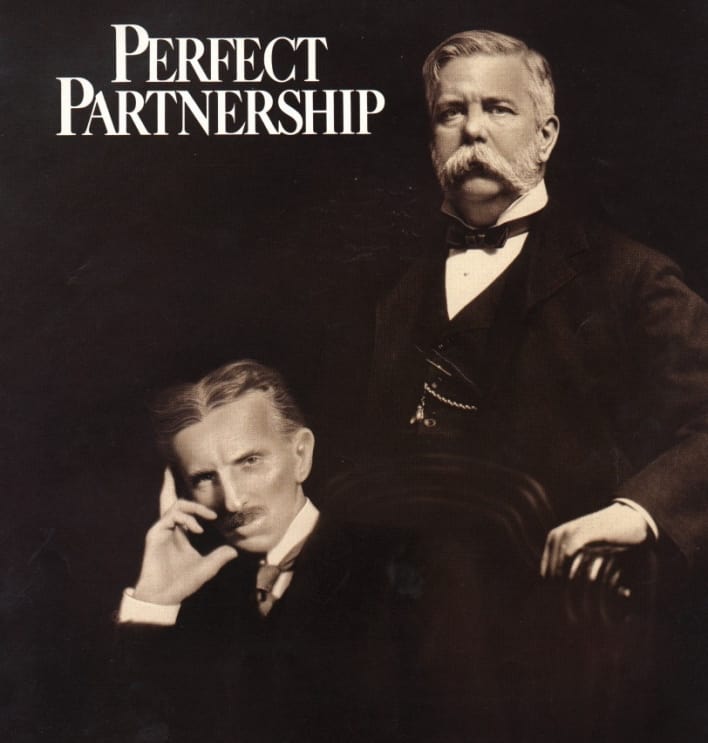
We need to create perfect partnerships with our clients

Regional Managers reach out to as many locations as possible where you may find people that need funding to operate or grow their business. The Tesla Foundation is in business to help keep small business owners in business and give them answers to questions that they have.

Here are some locations where you can find people that need help running and funding their business:

  • Linkedin.com
  • Local Business
  • Kick Starter.com
  • Indegogo.com
  • Producthunt.com
  • Domain Sales Companies
  • Hosting and Domain Sales Companies
  • Investment Banks, Groups and Companies
  • Everyone that Received a PPP and EIDL Loan
  • Small Business In Each and Every Town and City

The PPP Payroll Protection Program

Tax law definitions do not apply to much of the Payroll Protection Program (PPP), making it new ground for owners of S corporations. Here are answers to four questions of concern to many S corporation owners.

1. Spouse Owns S Corporation

Question. My wife owns 100 percent of the S corporation. She has a full-time job and does no work for the S corporation. I am the sole worker in the S corporation.

Am I treated as 

  • a “non-owner employee” of the S corporation or

  • an “owner-employee” subject to the limits?

Answer. The PPP guidance does not address the situation you describe. From what we know, you are a non-owner employee, which means you are not stuck with the owner-employee limits.

In tax law, you would have to consider “attribution rules” that would make you own what your wife owns because of your marital relationship. (Yes, in tax law you both would own 100 percent.)

But the PPP guidance to date contains no such rules.

According to the latest from the SBA, you may rely on the laws, rules, and guidance available at the time of your PPP loan application. As we write, the latest guidance is from over a month ago, on June 25, 2020.

2. S Corporation Owner-Employee with No W-2

Question. I submitted my PPP loan application before the guidance disallowing independent contractor payments was published. And at the time of submission, I had not yet started paying myself a salary.

Now I have the PPP money from the bank but cannot get it forgiven through contractor payments. If I pay myself on a W-2, I lack the look-back period of 2019 payroll.

Am I out of luck? Should I go on payroll and hope for the best?

Answer. Under the rules, you are out of luck. Your loan forgiveness is based on the lower of your 2019 W-2 (zero) or your 2020 W-2.

3. S Corporation Loan Based on K-1

Question. I operate my business as an S corporation with two W-2 employees other than me (I don’t receive a W-2). I applied for the PPP loan and obtained it based on my K-1.

A few weeks later the lender told me that the money I received was not available to be forgiven. It’s just not fair. My profit is my income.

Is there any workaround for this?

Answer. No—no workaround. But in your case, likely no PPP loan forgiveness problem either.

But first, let’s think about taxes. You operate as an S corporation, and you take no salary. (That’s incorrect and likely a tax problem if the IRS audits your tax return.)

Now, let’s get to the PPP. Your lender granted you the PPP loan based on the K-1 and ignored your employees. That shows how confusing the PPP has been. But let’s ignore the right and wrong of that and get to the heart of the issue. Can you obtain forgiveness?

Yes, your S corporation’s forgiveness begins with what you pay your W-2 employees during the 24-week covered period including what you pay in health insurance and retirement on their behalf.

In addition, you may include some or all of your payments for business interest, rent, and utilities during the 24 weeks beginning with receipt of the loan.

Example. Let’s say you received a $100,000 loan. If your payroll during the 24 weeks is $63,000 and the rent and utilities total $37,000, you would qualify for 100 percent forgiveness. If you achieve this in 20 weeks, you could apply for forgiveness then.

Observation. The fact that the lender based your loan on your profits is simply a mistake by the lender. It does not affect forgiveness, which is based on your using the money for the intended PPP purposes such as payroll.

4. S Corporation with Home Office

Question. Your tax guidance for the S corporation owner is for the owner to use an expense report to submit home-office expenses to the business for reimbursement and classify the reimbursement in the tax return as an office expense.

The idea behind this guidance is to avoid the rental fiasco.

How would we classify this as mortgage interest and utilities under the PPP loan forgiveness guidelines? We have the same question for partnerships where it is claimed as an unreimbursed partner expense.

Answer. The reimbursed expense won’t work for the PPP, but here’s the solution. Choose the 24-week program and you will achieve full forgiveness with only the payroll in as little as 10.8 weeks.

If you have PPP forgiveness questions, please don’t hesitate to call me.