Founder - CEO

President
Tesla Foundation’s mission is simple: readiness first, capital second. The Foundation doesn’t help companies “pitch better.” It helps them become fundable—by building the systems, documents, metrics, and discipline that investors need to say yes with confidence.
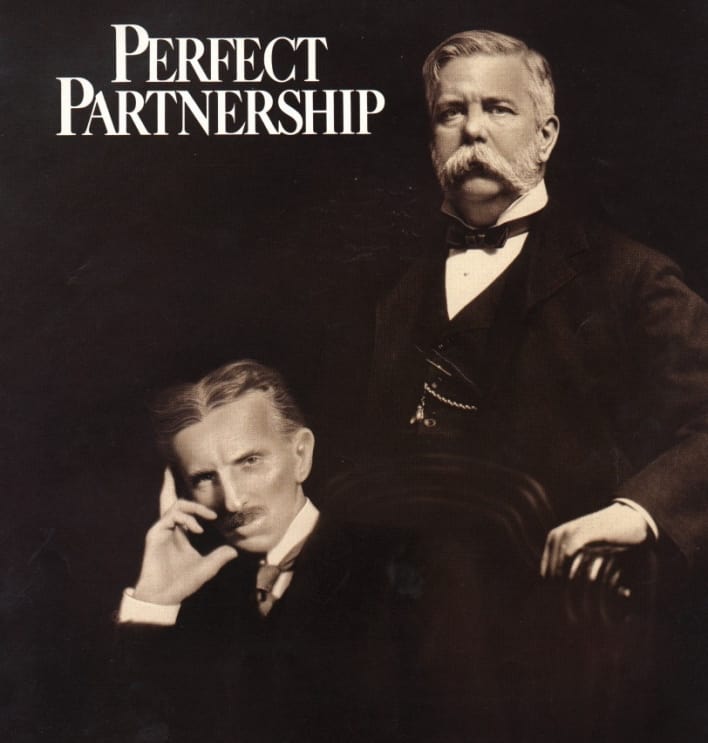
Nikola Tesla imagined a world where invention would lift the burden of survival from ordinary people. He believed that machines, automation, and abundant energy could take over most repetitive labor—freeing humanity to spend more time learning, creating, and building healthier communities. In Tesla’s dream, technology wasn’t meant to replace human purpose; it was meant to elevate it, allowing people to live with greater dignity and harmony while intelligent systems handled the heavy work in the background.
The Tesla Foundation in a effor to full fill Tesla’s vision has created an AI capital-readiness platform built to turn entrepreneurs, founders, and growth companies into investor-grade businesses.
They fail because they are not capital-ready. Financial models are incomplete. Data rooms are unstructured. KPIs are inconsistent. Operational discipline is unclear. And the investor narrative isn’t grounded in execution metrics that withstand diligence.
Tesla Foundation solves this by productizing the work investors require before they commit capital. Instead of offering slow, expensive, bespoke consulting, the Foundation uses standardized workflows, repeatable deliverables, and a readiness scoring system to reduce time-to-capital and improve diligence outcomes.
Companies are evaluated across the full diligence surface area—governance, financial infrastructure, operational systems, KPI reporting, data room management, capital strategy, and investor narrative—and then guided through a structured remediation path
What makes the model scalable is the Nikola Tesla School of AI Business Technology, a workforce pipeline that trains and deploys AI-enabled operators to produce fundable documentation, financial infrastructure, and execution systems under QA supervision. This creates a consistent, repeatable production engine for investor-grade output—faster, more cost-effective, and more scalable than traditional advisory models.

Regional Managers reach out to as many locations as possible where you may find people that need funding to operate or grow their business. The Tesla Foundation is in business to help keep small business owners in business and give them answers to questions that they have.
Here are some locations where you can find people that need help running and funding their business:
Tax law definitions do not apply to much of the Payroll Protection Program (PPP), making it new ground for owners of S corporations. Here are answers to four questions of concern to many S corporation owners.
1. Spouse Owns S Corporation
Question. My wife owns 100 percent of the S corporation. She has a full-time job and does no work for the S corporation. I am the sole worker in the S corporation.
Am I treated as
In tax law, you would have to consider “attribution rules” that would make you own what your wife owns because of your marital relationship. (Yes, in tax law you both would own 100 percent.)
But the PPP guidance to date contains no such rules.
According to the latest from the SBA, you may rely on the laws, rules, and guidance available at the time of your PPP loan application. As we write, the latest guidance is from over a month ago, on June 25, 2020.
2. S Corporation Owner-Employee with No W-2
Question. I submitted my PPP loan application before the guidance disallowing independent contractor payments was published. And at the time of submission, I had not yet started paying myself a salary.
Now I have the PPP money from the bank but cannot get it forgiven through contractor payments. If I pay myself on a W-2, I lack the look-back period of 2019 payroll.
Am I out of luck? Should I go on payroll and hope for the best?
Answer. Under the rules, you are out of luck. Your loan forgiveness is based on the lower of your 2019 W-2 (zero) or your 2020 W-2.
3. S Corporation Loan Based on K-1
Question. I operate my business as an S corporation with two W-2 employees other than me (I don’t receive a W-2). I applied for the PPP loan and obtained it based on my K-1.
A few weeks later the lender told me that the money I received was not available to be forgiven. It’s just not fair. My profit is my income.
Is there any workaround for this?
Answer. No—no workaround. But in your case, likely no PPP loan forgiveness problem either.
But first, let’s think about taxes. You operate as an S corporation, and you take no salary. (That’s incorrect and likely a tax problem if the IRS audits your tax return.)
Now, let’s get to the PPP. Your lender granted you the PPP loan based on the K-1 and ignored your employees. That shows how confusing the PPP has been. But let’s ignore the right and wrong of that and get to the heart of the issue. Can you obtain forgiveness?
Yes, your S corporation’s forgiveness begins with what you pay your W-2 employees during the 24-week covered period including what you pay in health insurance and retirement on their behalf.
In addition, you may include some or all of your payments for business interest, rent, and utilities during the 24 weeks beginning with receipt of the loan.
Example. Let’s say you received a $100,000 loan. If your payroll during the 24 weeks is $63,000 and the rent and utilities total $37,000, you would qualify for 100 percent forgiveness. If you achieve this in 20 weeks, you could apply for forgiveness then.
Observation. The fact that the lender based your loan on your profits is simply a mistake by the lender. It does not affect forgiveness, which is based on your using the money for the intended PPP purposes such as payroll.
4. S Corporation with Home Office
Question. Your tax guidance for the S corporation owner is for the owner to use an expense report to submit home-office expenses to the business for reimbursement and classify the reimbursement in the tax return as an office expense.
The idea behind this guidance is to avoid the rental fiasco.
How would we classify this as mortgage interest and utilities under the PPP loan forgiveness guidelines? We have the same question for partnerships where it is claimed as an unreimbursed partner expense.
Answer. The reimbursed expense won’t work for the PPP, but here’s the solution. Choose the 24-week program and you will achieve full forgiveness with only the payroll in as little as 10.8 weeks.
If you have PPP forgiveness questions, please don’t hesitate to call me.